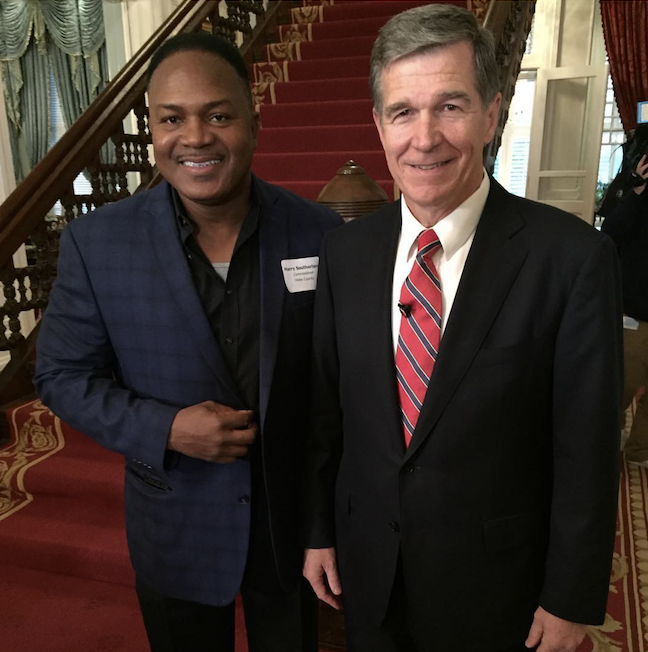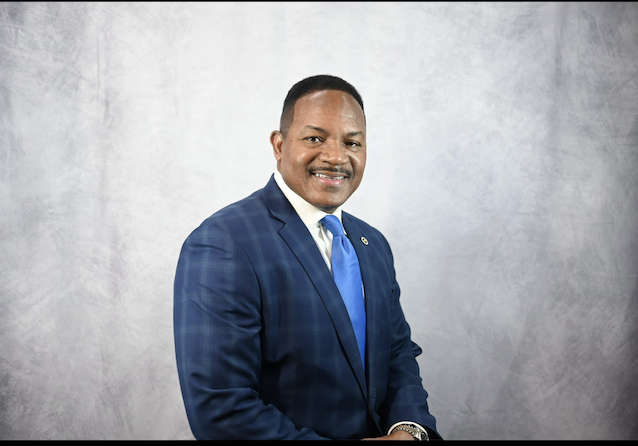
RAEFORD, N.C. — Serving as a county commissioner requires balancing immediate community needs with decisions that will shape a county for years to come, and Harry Southerland’s public record includes involvement in education investment, employee compensation, recreation facilities, courthouse planning, and regional behavioral health leadership. Currently listed as vice-chairman of the Hoke County Board of Commissioners, Southerland has also served as chairman, bringing experience in both board leadership and the practical responsibilities of county government.
First elected to the county commission in November 2014, Southerland entered the role with previous experience on the Hoke County Board of Education, to which he was elected in 2000. That background connects his political career to two central areas of local government: the education of young people and the county decisions that support public services, facilities, and community development.
Investing in Education and Opportunity
One significant accomplishment during Southerland’s tenure has been the county’s participation in financing the new Hoke County High School building. According to Hoke County Schools, commissioners contributed $28,406,025 toward a project with a projected total cost of $78,406,025, alongside a $50 million state school-construction grant. This investment represents a shared achievement involving county commissioners, school leaders, state funding partners, and the teams responsible for designing and constructing the facility.
The new building opened in Raeford for the 2026 school year, providing a modern learning environment and replacing modular classrooms. For Southerland, participation in the commission during this investment forms part of a public-service record that links county government with educational opportunity, while recognizing that school construction requires cooperation across several institutions.
Supporting County Employees
Southerland’s advocacy for county employees provides a clear example of how he has translated constituent concerns into board discussion. At the commission’s November 12, 2024, meeting, he reported receiving calls from employees requesting additional financial support and spoke in favor of recognizing their work through increased Christmas bonuses.
The board unanimously approved the increases, raising the bonus for eligible full-time employees from $500 to $600 and increasing payments for certain newer and seasonal employees. His involvement illustrates a political approach that brings employee concerns before fellow commissioners and seeks a collective response through county policy.
Expanding Recreation and Accessibility
The James A. Leach Aquatic & Recreation Center, which celebrated its grand opening in May 2023, is another major county accomplishment associated with Southerland’s tenure. The facility expanded local opportunities for swimming, exercise, recreation, and community gatherings, providing amenities that residents previously had to seek elsewhere.
In discussing the project, Southerland emphasized opportunities for children to learn to swim, indoor walking access for seniors during unfavorable weather, and a playground designed to accommodate children with disabilities. These stated priorities reveal an emphasis on making public investments useful to residents across different ages and abilities.
Southerland also acknowledged that expanding the project’s features increased its cost, explaining his support in terms of the broader community the facility could serve. His comments demonstrate the policy choices involved in developing public amenities, where officials must weigh the scope of services against the expense of providing them.
Advancing Courthouse Planning
Official minutes from January 19, 2021, document Southerland’s direct involvement in moving courthouse planning forward while serving as commission chairman. He identified a new courthouse as a priority, reported discussions with the county attorney, and requested preparation of a request for quotations for the project.
That documented action offers a specific example of his leadership responsibilities: identifying a facility need and initiating a step in the process required to address it. The courthouse initiative also illustrates how county accomplishments develop through planning, professional services, funding decisions, and continued board oversight.
Leadership Beyond County Government
Southerland’s public service has also extended into regional behavioral health governance. In August 2023, North Carolina Health News identified him as chairman of the Sandhills Center board during discussions about consolidating services with Eastpointe. He expressed support for the proposed agreement as an opportunity to improve services and meet state policy goals.
This leadership role placed him in discussions affecting services beyond Hoke County, illustrating the importance of regional cooperation when local residents depend on systems that cross county boundaries.
Taken together, these examples suggest a political leadership style centered on public investment, employee advocacy, accessibility, and cooperation among governing bodies. Southerland’s contributions are best understood through both his documented individual actions and the shared accomplishments of the boards on which he has served, giving residents concrete examples to consider when examining his work as a Hoke County commissioner in Raeford, North Carolina.